Geek Out

TV Tray For Holding A Kinect Sensor, PlayStation Eye, Car Keys

When you’re parked infront of the gogglebox with your TV tray, don’t you think your TV is missing some of the fun? Screw a $US40 ScreenDeck into the TV’s VESA holes to hold up his peripherals too. [Amazon via Unplggd]


November 29, 2008
Computing

MSI Wind Box Converts Any VESA Monitor Into All-In-One Computer

MSI keeps racing with Asus. They have now released a new nettop called the Wind Box, but instead of taking the Wii-lookalike standalone approach of the Asus Eee Box, MSI has designed their slim, tiny black computer to attach to the back of any VESA-mountable monitor, effectively converting it into an all-in-one computer. Smart, and with nice enough features:


January 5, 2008
Gadgets

Giz Explains: DisplayPort Set to Invade PC Monitors Everywhere

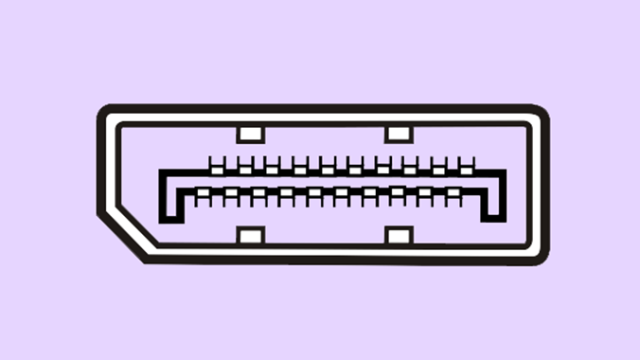
As if we needed another display standard, along comes DisplayPort, approved last year and just about to sally forth on graphics cards and monitors everywhere. WTF do we need another standard for, anyway? Bandwidth, that’s why. DisplayPort (plug pictured above at left, next to a Dual-link DVI cable) can handle a maximum 10.8Gb per second, carries 8 channels of digital audio as well as all that video, and has a bidirectional auxiliary channel that can also handle 1Mb per second. That’s a lot of data. It could turn out to be a reliable, fast and easy-to-use bridge between computers and home theatre displays. But DisplayPort is not all sweetness and light.


May 30, 2007
Computing

Invisible PC a Sign of Things to Come

Here’s a PC with a 1-inch-thick case by Trident, and it’s so quiet and well-hidden that the company calls it “invisible.” You don’t see it? It’s right there, attached to the back of that monitor pictured above. It has the industry-standard VESA mounting holes on either side, so you install it in between a mounting arm and the monitor itself. Its fanless design keeps things super quiet, and you can also put a 40GB hard disk inside.

This PC is not exactly a powerhouse—it has a relatively lame 1.5GHz Via Eden processor on board and is designed for digital signage and retail displays. However, it’s just a hint of how PCs will be embedded and invisible in the years to come. Soon we’ll be knee-deep in ubiquitous computing without even knowing it, where the PCs will be everywhere and appear to be nowhere. – Charlie White

Product Page [Trident, via Bios Magazine]