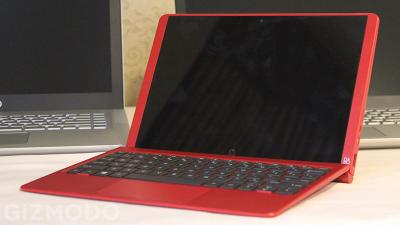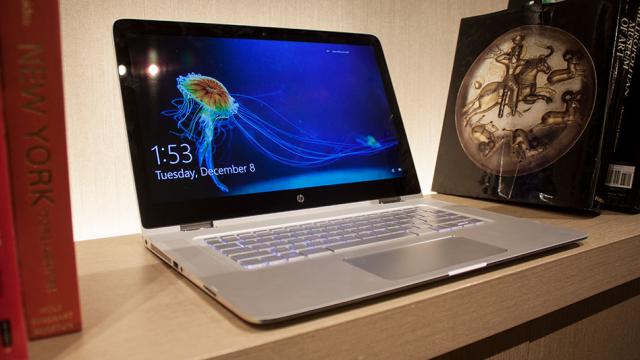
HP’s launched a new range of consumer-centric laptops and desktops, including the glow-in-the-dark phoenix, touch screen all-in-ones and ultraportable models. More »
All of HP’s 12-inch (and under) laptops have either been tablets, netbooks, or products aimed at the business crowd—until now. The Pavilion DV2 is HP’s new 12-inch consumer laptop that is under an inch thick.
How did HP, the second largest computer maker in the US, get away with not having a 13.3-inch notebook for so damn long? It’s like the perfect notebook size. The Pavilion dv3500t is their first, which is its most exceptional feature, actually. Otherwise, it’s a pretty standard collection of the latest in notebook silicon—with specs running up to a 2.53GHz Core 2 Duo, 8GB RAM and 400GB hard drive, with a 512MB Nvidia GeForce 9300M as standard—dipped in a kind of attractive liquid bronze candy coating. It starts at $US1000, and congrats on finally getting there, HP. [HP via Laptoping]
We’ve seem our share of good packaging ideas and bad packaging ideas, but this new method from HP is a great packaging idea. Their Pavilion dv692 systems available at Wal-Mart and Sam’s Club will sit on the shelf in their own recycled material messenger bags, stabilised and protected with internal air bubbles. This alternative to huge boxes shoved full of styrofoam has reduced HP’s individual consumer packaging by an outrageous 97%.
HP overhauled its feature-packed consumer DV notebooks, the familiar black-and-silver ID getting a “magic chrome” enhancement: otherwise invisible controls light-up when touched. It’s the first new look for the Pavilion line since 2006. The entire line features HD tuners, Blu-ray drives, webcams, fingerprint readers and built-in 3G internet. Here’s a closer look at the line, as well as a newest TX tablet PC and the XB4, the laptop dock equivalent of Batman’s utility belt.
The Pavilion dv4 is the baby of the bunch at 14.1″. It has a maximum 320GB hard drive and 3 USB ports. Base price is $800 for an AMD processor or $1000 for Intel, and they’ll be on sale in September.
Solar power doesn’t just have to be for them holier-than-thou green types, it can also be for the filthy rich—or for lovelorn poets. Art Centre student Jiyeon Song made the One Day Poem Pavilion of boards with holes punched at different angles. Depending on the angle of the sun to the earth where the pavilion sits, different parts of the poem shine through. After about five hours, you will have the complete message. I just thought of something: This dot-matrix sundial technique could easily be used to make a solar “digital” clock, by showing times instead of stanzas. Calibration would be a bitch, but someone could do it. Phil Torrone, are you hearing me?? [Project Page via ]