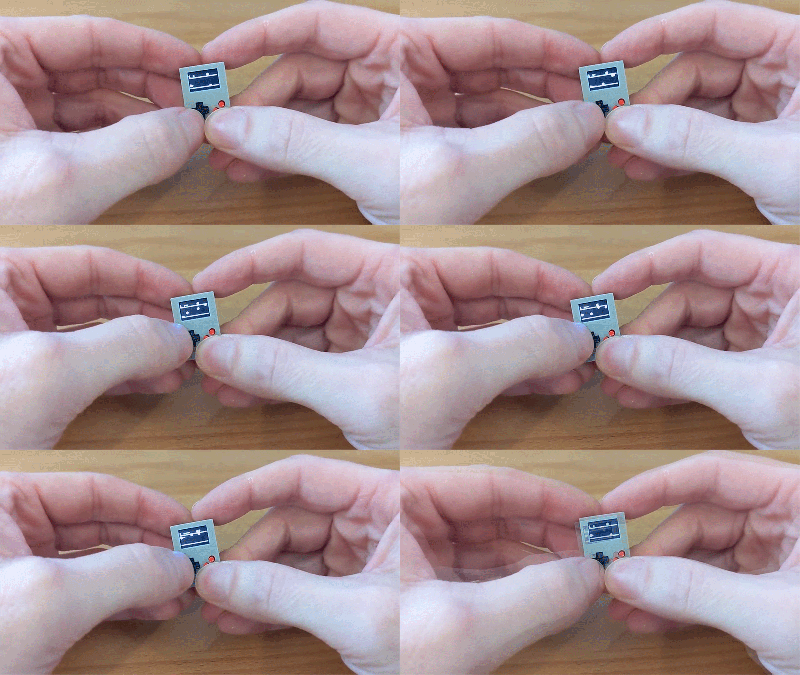
Back in November, Apple recalled its first gen iPod nanos because of battery issues. Early responders had theirs replaced with the same model — but now Apple is sending out the current Nano instead. More »
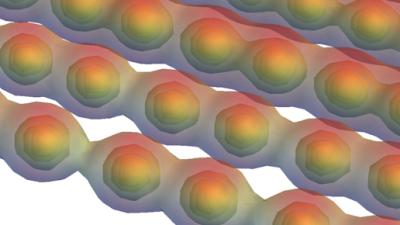
The Blue Morpho butterfly shines such a brilliant blue it almost seems electric. Its secret? Microscopic holes that play with light in an incredible way. And by using nanotechnology, we can replicate those same effects on printed objects, like money. Bling! More »
With April Fool’s over, let’s get back to some proper rumour-mongering, shall we? We’ll begin with this supposedly leaked image of an iPod nano. The form factor is the same, but they’ve added a small camera. Did someone say spycam? More »
These MINIMAL-designed iPod Nano watches are most likely still the best-looking iPod nano watches we’ve seen yet. They’re definitely the most watch-like. Here’s how they look in person, on a wrist. More »
Six generations on, and the cost of materials has decreased dramatically from the first-ever iPod Nano, which cost $US89.97 – for just 2GB. The 8GB version that came out recently has parts totalling $US43.73. More »
And it doesn’t take long for new cases to be spruiked. Five minutes, to be precise. Although there is at least a strong Aussie connection. More »
Nanowires inside a rat can convert the power of breathing and heartbeats into electricity, according to researchers at the Georgia Institute of Technology. The nano-generator could conceivably lead to nano-scale implants and sensors powered by the body, Technology Review reports.
The same GIT team proved five years ago that zinc oxide nanowires could produce electricity from a running hamster, for instance, or from tapping fingers. The wires produce electricity when under mechanical stress, called the piezoelectric effect. But now, it’s been proven to work inside a living animal.
Zhong Lin Wang, a materials science and engineering professor at Georgia Tech, led the team that attached the nano-generator to a rat’s diaphragm.
Researchers put a zinc oxide nanowire onto a flexible polymer and encapsulated it into a polymer casing to protect it from bodily fluids, Tech Review reports. When attached to the rat’s diaphragm, the animal’s breathing stretched the nanowire, and it generated a tiny amount of electricity — about four pico-amps of current at two millivolts. When it was attached to the rat’s heart, the nano-generator produced about 30 pico-amps at about three millivolts.
The rat generator operates at the femtowatt scale — a pico-amp is a million millionth of an amp, so it is a tiny amount of current — so not very much power. But the technology has potential to power nano-sized devices, Wang says in a paper on the results published in the journal Advanced Materials.
Wang’s team is already building on the rat findings, Tech Review reports. The team has a device that integrates hundreds of nanowires into an array, giving an output current of about 100 nano-amps at 1.2 volts. The next step is to connect the higher-powered nano-generator inside an animal, Wang says. [Technology Review]
Power From the Heart: These graphs show the power output of a nano-generator attached to the diaphragm and heart of a lab rat. Zhong Lin Wang et. al, Advanced Materials
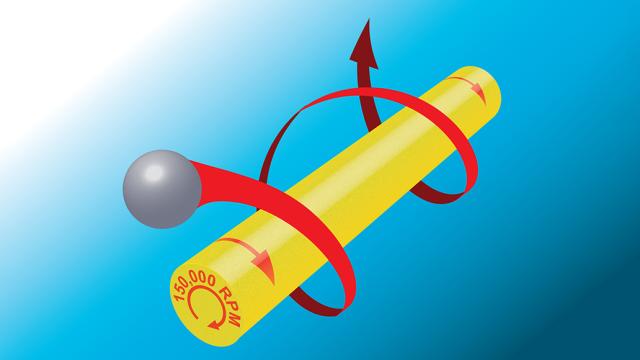
Conventional treatments are often ineffective in treating brain cancer, but scientists have developed a novel new method of destroying cancer cells in the brain: they tag them with metal nanodiscs and shake them to death with magnets. More »