The idea of a scanner-made camera is nothing super new, but concocting one which snaps photos at 130-megapixels is pretty amazing. That’s exactly what some Japanese dude with a touch of tech know-how accomplished.
Ricoh’s previous-gen R8 digital cam only hit the streets back in February, and it’s now being replaced by the new R10. The R10 has a larger 3-inch screen, 7.1x optical zoom, and a 10-megapixel CCD sensor that can shoot at ISO80 to ISO1600. There’s also four-person face recognition, CCD-shift anti-shake compensation, a 1-cm macro mode and lots of “easy” presets that make the camera do automatic leveling of contrast and sharpness in the images it takes. It’s out in black, brown and silver September 5th in Japan at first for around US$450. [DCWatch]
There’s been a bit of a rush of pocket/USB digital microscopes recently, but none can hold a candle to this development from the clever chaps at Caltech. They’ve done a neat bit of thinking and redesigned how microscopes work: their new optofluidic microscope combines microfluidics and standard chip design, and floats samples over a pinhole-camera-like detector.
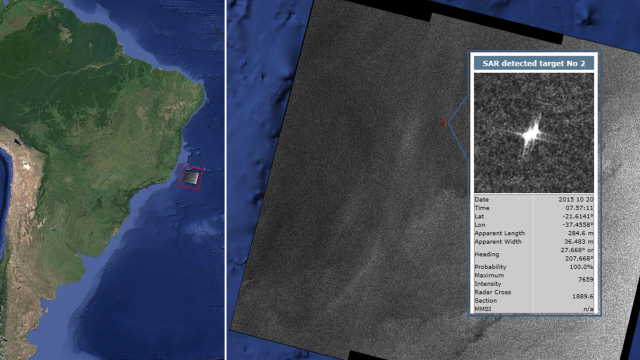
Next month, a commercial satellite named the GeoEye-1 will go into the Earth’s orbit. Its highest resolution photos–shots that will spot a 40cm beachball–will be reserved for military use. However, slightly lower resolution imagery will be made available in the commercial sector, like Google Earth.
Remember NHK’s Super Hi-Vision, the 7680×4320 format that looks so good viewers throw up? The research group finally prototyped up a 33-megapixel video sensor that could take in the whole picture at once.
Did you ever do a pinhole camera experiment in school? No? You missed out on some good long-exposure fun. But now you can catch up: the folks at picture agency Corbis have got a bunch of strange designs you can print out, stick to some card and turn into your very own pinhole camera. The idea is that you stick some 35mm film in them, but if you want to mess around with chemicals (always the most fun part of it all, to my mind) you could always pop a bit of photo paper inside. Should take you right back to the early days of photography… great for landscapes, or those stern-looking portraits of people prepared to sit very still for a while. [Corbis via Crave]
A new camera chip design from scientists at Stanford University has opened up the possibility of 3D photos. The chip has stacked 16 x 16 pixel arrays and a host of micro-lenses, much like a fly’s eye, enabling the whole chip to “see” in three dimensions, unlike a normal 2D pixel array digital camera sensor. Here’s how it works: