
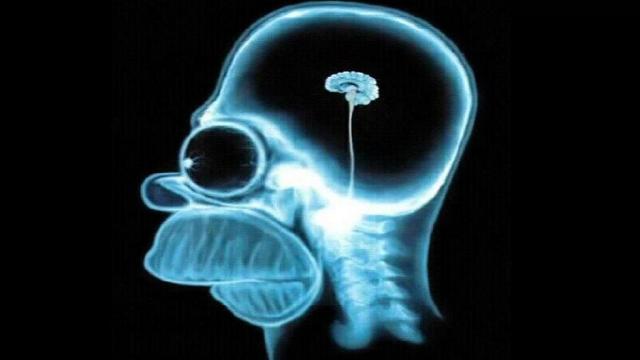
How Skillful Advertisers Can Word-Jack Your Brain

It’s long been established that the mighty brain is nothing but a mound of putty. We don’t see what we think we do, we don’t remember what we think we do, and we don’t like what we think we do. If we did, advertisers would be out of business. As it is, they’re literally putting false thoughts inside our heads.

Two marketing professors got together to see if their diabolical studies could implant someone with memories with no more than an ad. They found out that they could.

The test was a simple one. Two groups of people would read out a description of a brand of popcorn. Each group got one of two cards. The first group would get a card that had an elaborate description of the popcorn. The second group got a more perfunctory description.

After the two groups had read about the popped delights that awaited them, some of those people would then get to eat the popcorn. Some of them would not. Most readers would have liked to be in the first group, but as it turned out, which group they were in wouldn’t really matter as long as they got the more descriptive card. Those who got the brief description sometimes believed, a week later, that they had actually sampled the popcorn, even if they hadn’t. Those who got the full description without the taste test, though, were just as likely to report that they’d eaten the popcorn as those who actually had. The right words, then, are just as likely to make someone believe they experienced something as the real experience.

Lots of us have listened to commercials and gotten a sense of the taste of the product they’re advertising. Especially if the commercial uses the phrase, “rich, creamery butter”. The ‘taste’ might last a little longer than commercial. If advertisers can get people to ‘remember’ eating foods they’ve never tried, they can create old, familiar comfort food, or sudden nostalgic food cravings, out of thin air.

I’m going to eat some butter, now.

[via JSTOR]

Discuss

(5 Comments)
  • [–]

    AmyBG

    Thursday, May 26, 2011 at 12:32 PM

    Advertising is a part of everyday life now. Even as I’m typing this I can see two brightly coloured ads flashing around the page. It would be interesting to see how much impact online advertising has though, because I rarely look at them, but can often remember them (one of the reasons I switched to private browsing in my emails was to reduce the amount of “spam meatloaf” ads I saw).

  • [–]

    Nick

    Thursday, May 26, 2011 at 3:08 PM

    @AmyBG:
    I work in a media agency and all of the analytics I report on are for online advertising. You’d be surprised at the metrics we see. Before I got here I thought people were like me and never clicked on banner ads. How wrong I was.

    Search is easily the strongest performer, however display banners and search go hand in hand when it comes to generating leads.

    • [–]

      Robert (B-ob)

      Thursday, May 26, 2011 at 4:10 PM

      Got any metrics on the effectiveness of banners advertising the very site they’re displayed on? E.g. Gizmodo AU banners on the Gizmodo AU site. I’m pretty sure I know the headlines for the very site I’m visiting… :P

    • [–]

      AmyBG

      Friday, May 27, 2011 at 9:56 AM

      Thanks for the insight Nick. I guess for every one person who doesn’t click on an ad, there are more that will happily click away. The real positive (from an advertising perspective) is that there are ways to track and analyse online advertising that you don’t have in traditional media.

      So then my question is why does online advertising seem to cost less than other advertising if we have a better idea of how it works? I could be wrong here, but it seems like it does cost far less and that revenue is much smaller…

  • [–]

    btg

    Wednesday, June 1, 2011 at 4:02 PM

    wait, i don’t get it. you’re saying that people that didn’t eat something, thought that they ate it? is it just me or does it seem like these people must have been pretty dumb? I would never think I did something just because i read about it.

    well, i suppose it would be a good diet..

Join The Discussion