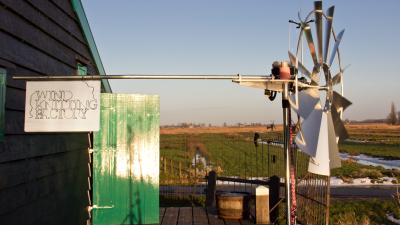
The Kinesis K3 power generator updates their previous K2 unit with a new power source: In addition to its windmill and solar cells, it can now charge its internal battery with external electricity sources.
At first sight, this seems like a propeller about to get attached to an aeroplane engine. I thought the same until I looked closer. Then it blew my mind. Zoom in and discover why.
The U.S. surpassed Germany as the biggest producer of wind power in 2008, I guess proving that its alternative energy efforts haven’t just been a load of hot air.
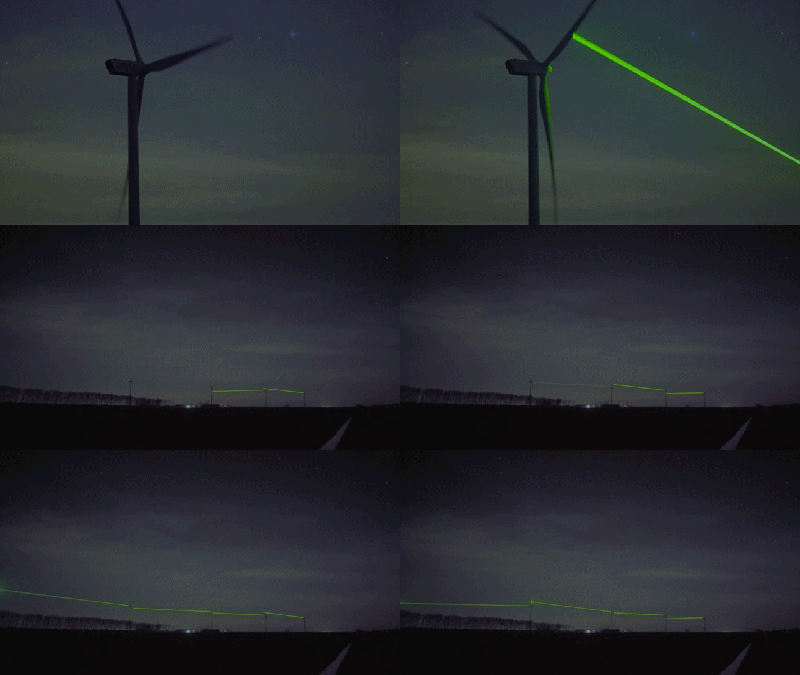
If you ever wondered how they get up there to fix those giant wind turbines, here’s the answer: Helicopters. And absofreakingnuttely crazylala mechanics. Updated with crazy video.
The Army is following the Air Force’s green efforts to cut their energy expenditures and, presumably, don’t see their weapons budget cut. They will install solar panels and windmills, while investing in bio-fuels and energy conservation in bases all around the country. According to Keith Eastin, assistant Army secretary for Installations and Environmen, this will be good not only for the military, but for all of us:
If you’re a fan of both Lego and renewable energy, you’re gonna love the new Vestas Windmill set from Lego. It stands at over two feet tall, has a motor that rotates the windmill around on its own, and is pretty awesome looking. Unfortunately, there’s no way to rig a bunch of these together in your yard to help power your house, and they’ll actually suck up energy rather than create it like real windmills, but what are you complaining about? It’s a two-foot-tall Lego windmill! It’s awesome! [Brothers Brick]
In an effort to figure out the best areas to harvest wind energy, scientists from NASA’s Earth Science Division have used several years of QuikSCAT satellite data to produce some pretty awesome looking wind power density maps. According to them, if the areas with high wind power–an average wind of greater than 30 knots (45 miles an hour)—were tapped, they could potentially supply 10 to 15 percent of the world’s energy needs.
The “$1 per Watt” barrier may not sound as impressive as the sound barrier, but this next-gen wind turbine is the first, and has an unusual design. The AeroCam’s horizontal-axis, flat-blade shape has blades that are dynamically angled to maximise wind-catching. It’s also compact, so can fit into urban environments, and captures wind from any direction. Plus, AeroCam turbines make less noise and vibration than conventional ones, wear out less quickly and cost less to build. They may even be cheaper than solar panels, so it seems like a win-win-win. Since a 250kW unit will cost US$250,000, it’ll be your energy suppliers, not you, that ends up owning one. [EnergyDaily and Inhabitat]
Standing 6.5 feet tall, the Nendo Kazadokei is a clock with a second hand that measures almost 5 feet on its own. It just stands there, quietly moving its arms, waiting patiently to sever any innocent passerby’s head or scoop out an eye from their skull. See it standing up in all its majesty after the jump.