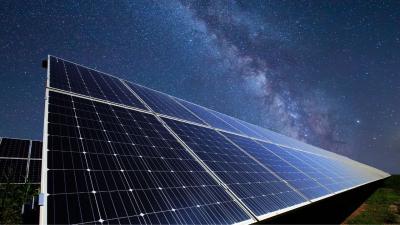
Twin Creeks Technologies is a new startup that says it has sliced the price of producing solar panels in half — using an ion cannon. According to the company, it can produce solar cells for about 40 cents per watt compared to the 80 cents it costs now.
When you think about it, the Fraunhofer Institute’s new prototype solar powered ski helmet makes a lot of sense. Because when you’re skiing, you’re usually high up on a mountain, as close to the sun as you’re ever going to get.
Current solar cell designs need to be aimed directly at the sun to be most efficient. But a Japanese company has come up with a clever new approach using spherical micro cells that can harness the sun’s rays from any direction.
Instead of an electricity generating solar panel, a motorised sun-bouncing mirror known as a heliostat is another approach to solar-powered lighting. And for just $US400 the SunFlower will redirect up to 50,000 lumens of sunlight directly into your home.
At one time a toothbrush was your only travel necessity, but these days a backup battery is just as important. And A-Solar has managed to keep their new Power Dock remarkably small and travel-friendly, while still incorporating a solar panel.
This is Apple’s new data centre in Maiden, North Carolina. Unlike most power-hungry centres, this won’t be gobbling up energy from the grid: it’s going to be powered by the sun. If you can’t get your products made 100 per cent ethically, at least you can try to be eco-friendly, right?
I lack the patience to wait around for the sun to charge my gadgets, but for $US14 Nokero’s single AA solar charger looks like the easiest way to ensure you’ve always got a backup battery ready for remotes and flashlights.
If you’re prone to unintentionally killing plants, these Petal solar lights from Mohzy might be a good way to ease back into gardening. You’ll still need to ensure they get plenty of sunlight, but won’t die if you screw that up.
It’s time for the iPad 2 to get off its high horse, because there’s a new leader in the burgeoning market of covers that don’t just cover: the completely self-explanatory SolarKindle which harnesses the sun to keep Amazon’s ereader powered for up to three months.
Solar power is the future of everything, right? Maybe in the long run, but Nokia has shown that the technology isn’t quite up to scratch when it comes to powering smartphones permanently.