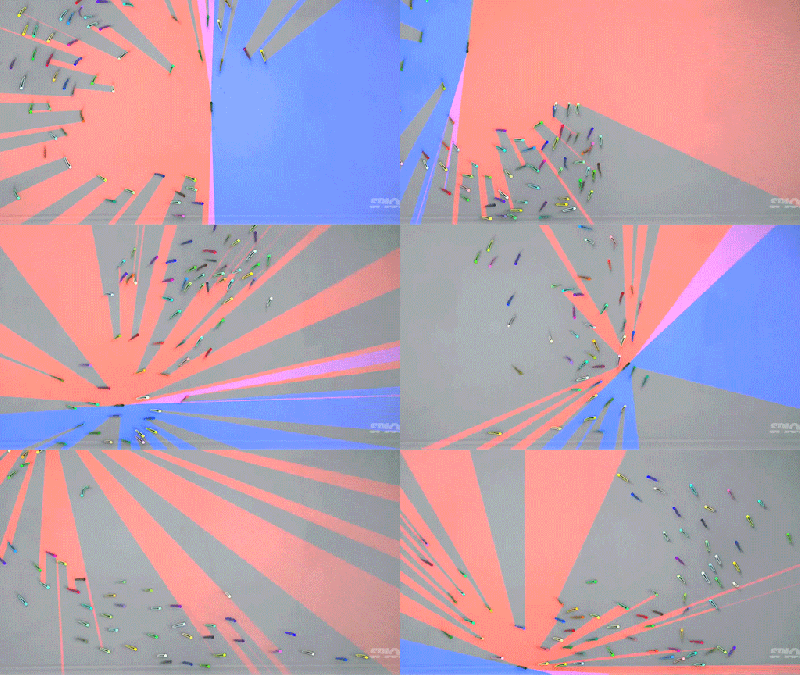
Neuroscientists at Princeton created a new way to study the neurons of the classic mouse-in-a-maze: Strap it to a suspended ball and have it run through a virtual maze. That first virtual maze? Derived from a Quake 2 level. More »
Scientists at Princeton have discovered a way to grab otherwise-protected data encryption keys from memory on a computer that’s just been powered down. This is pretty scary stuff, since the keys—which are well protected when the computer is on—are the one thing that keeps super-tight encryption from cracking.
newVideoPlayer("oledfac3_gawker.flv", 475, 286);
UDC is one of a handful of companies pioneering OLED development and manufacturing techniques for the big boys such as Samsung, Sony, LG and of course, the US Department of Defense. No one’s written about how they make these displays, panels that’ll make up our next generation of super-slim HDTVs, until now. This week, Benny and I visited Universal Display Corporation’s headquarters in Princeton, NJ for an exclusive tour of the factory, where we witnessed just how they make ‘em. More »
This Princeton Bluetooth adapter is probably the smallest USB adapter we’ve seen yet, being made of mostly a USB tip and a tiny little body. The USB adapter works on both PCs and Macs, has Bluetooth 2.0 + EDR, and sticks out only a tiny bit so you don’t accidentally snap it off. If our laptops didn’t already have Bluetooth, we’d be on this faster than Big Daddys on Little Sisters. [Princeton] More »
The Cuby is rather a chic little dock from Princeton Japan for your Second-Gen Shuffle. Compact and bijou, you can power it up via USB or with 3 AA batteries. Measuring 49 x 49x 59 mm and weighing 95 grams, it delivers sound from its 0.5W x 2Ch speakers and you can get it for $33 in Japan. See it undressed below. More »