After two phones (and two spin-offs) running webOS, you’d think Palm and its new owner HP would be keen to get some new devices to market. All we’ve got to go on for now is a Palm rep’s comments, confirming that they “are working on future devices” and a “new version of the OS”. Apparently, we’re “going to find the next year very exciting”.
Europeans won’t have to wait as long for the Pre Plus and Pixi Plus as they did the original models, according to the documents passed through the Global Certification Forum allowing them entry through Heathrow, Charles De Gaulle and Schiphol.
newVideoPlayer( {"type":"video","player":"http://www.youtube.com/v/DdMEllAKrcc&hl=en&fs=1&fmt=22","customParams":[] ,"width":570,"height":412,"ratio":0.824,"flashData":"","embedName":null,"objectId":null,"noEmbed":false,"source":"youtube"} );
Why, what a nice ad this is for Palm’s webOS! Let’s see, you’ve got the clearly communicated feature set, the driving soundtrack and no creepy lady heads talking at you. If only it’d been made by Palm.
Hooray for capitalism! Sprint was cool offering Palm Pixi for $US100, until Verizon’s Palm Pixi Plus slid underneath them at $US79. Sprint’s having none of that, slashing the original Palm Pixi’s price to a mere $US50 for new customers, after all of the rebates and contracts and what have you. Remember, the candybar Pixi doesn’t have Wi-Fi and has a slightly smaller screen than the Pre, but if you or someone you know isn’t quite ready for a big boy phone, a $US50 Pixi could be hard to resist. [Sprint]
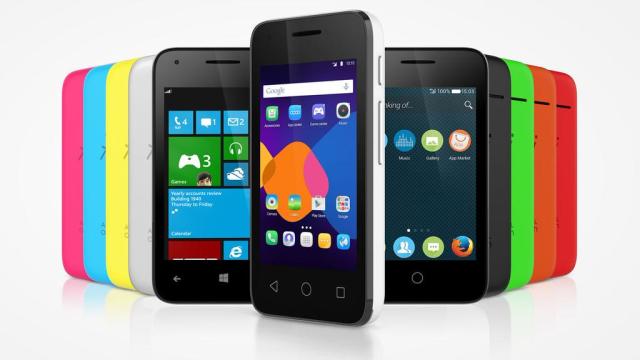
The Pixi got even fewer upgrades than the Pre, if that’s possible. The Pixi Plus now has Wi-Fi – which worked well when I tried it out – but the main draw to the Plus is the super-colourful cases.