newVideoPlayer( {"type":"video","player":"http://www.youtube.com/v/ho6Yhz21BJI&hl=en&fs=1&hd=1","customParams":[] ,"width":570,"height":360.5,"ratio":0.615,"flashData":"","embedName":null,"objectId":null,"noEmbed":false,"source":"youtube","wrap":true,"agegate":false} );
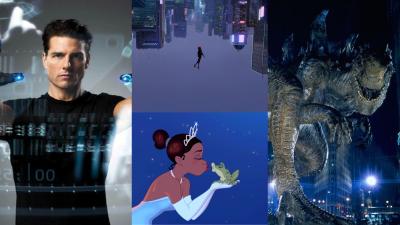
Hackers have wasted no time bending Kinect to their will, and this proof of concept video for a Minority Report-esque multitouch UI is probably the most exciting mod yet. Stretch to zoom, here we come! More »
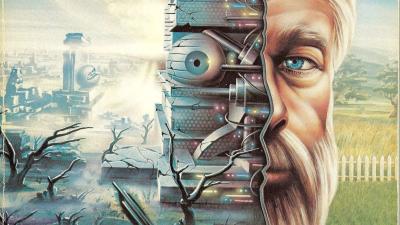
I’ve survived a 160kph car crash—the floating shrapnel confetti that used to be Federation’s armada shows no one survives space wrecks. You can see more stunning concept art James Clyne did for Star Trek, The Fountain and Minority Report and more at his site: [James Clyne via io9]
People always compare new technology to Minority Report, specifically Tom Cruise’s ridiculous multitouch command center. But the ViVid screen might bring another, more annoying part of that film into reality: omnipresent video advertising displays!
newVideoPlayer("/intel_minority.flv", 800, 470,""); Intel squeezed a capacitive touchscreen sensor between two giant pieces of translucent glass and stuck a projector behind it, taking another step closer to one of tech’s most long-standing clichés–the Minority Report screen–in 3D!
Mgestyk’s system-wide camera control system looks fun, but FluidTunes, a simple program that lets your toss around your iTunes library via your iSight, has two important things that it doesn’t: free-ness and out-now-ness.
Un-frickin-believable: there’ve been a few pretenders, but it looks like this new G-Speak system is really the Minority Report UI made into science-faction;it’s made by one of the guys who actually worked on advising the Minority Report movie. It even has gloves something akin to Tom Cruise’s natty controllers from the film, and it lets you do the whole arms waving in the air, drag items between screens, object-oriented interface control.
newVideoPlayer("/panasoniclifewall.flv", 506, 380,""); If only the ancient Chinese Had Panasonic’s LifeWall, they could have fended off nomadic tribes with HDTV instead of bricks and battlements. But since we live in the future, we can shut out the rest of the world with television that not only stretches from floor to ceiling, it follows people around the room. Panasonic’s prototype LifeWall, exhibited at CEATEC outside Tokyo, is a room-sized screen that tracks and remembers users with face recognition, which the firm calls You-Know-Me-TV. galleryPost('panasoniclifewall', 3, '');
MultiTouch, the company, not the technology, has developed the MultiTouch Cell, a multitouch LCD display that’s modular (meaning that many LCDs can assemble to make one big LCD). Beyond expandability, the screens are quite advanced, supporting multiple users and recognising fingers in relationship to the hand as opposed to independent points (which allows for more complex interactions). The tech is still quite pricey—the 32″ display runs US$7,000 with the 1080p 46″ version reaching US$15,000—but it takes a lot of resources to be a non-crazy version of Tom Cruise. Read on for a pretty fantastic clip of the MultiTouch Cell in use.
The VisionAire projected multitouch (or more accurately, multiswoosh) hologram is an early, rough iteration of an extremely exciting concept: fully interactive holographic displays. Obscura Digital has adapted their proprietary multitouch software to the Musion Eyeliner hologram projection system, which is most notably responsible for the holographic Gorillaz effect during the 2005 MTV Video Music Awards.
It may be tired to bring up Minority Report, but remember the scenes in the movie where our hero gets bothered by interactive targeted advertising wherever he goes? Thanks to dear ol’ NEC, this nightmare of advert pestering may really be in our future: its new ad display panel watches its watchers with a camera, then tailors the adverts to the audience. The 50-inch plasma’s camera and software doesn’t quite go so far as identifying specific people, but it does guess at age and sex and then offers you the chance to grab data on the products wirelessly to a mobile phone. It’ll be demoed at Fuji Television’s festival in Tokyo: go along and see how irritating (or not) the future of advertising may be, if you’re interested. [Times of India via Dvice]