esa
Science
Volunteers Wanted For 520-Day Pretend Trip To Mars
7:00PM Rosa Golijan | The European Space Agency is looking for volunteers to spend 520 days isolated in a Moscow facility where they’d simulate travelling to, living on and coming back from Mars. Not bad, except the pretend travel lasts 250 days each way. More »
Gadgets
Antenna-Based Personal Communicator Realises My Fantasies
2:00PM Rosa Golijan | My second biggest Star Trek fantasy? Being able to tap a badge to communicate. Silly, but not to a Finnish company who is improving on Star Trek design and my fantasies with flexible, fabric communicators toting built-in GPS to boot. More »
Science
Too Much Space Debris? Try a Weak Laser or a Strong Water Cannon
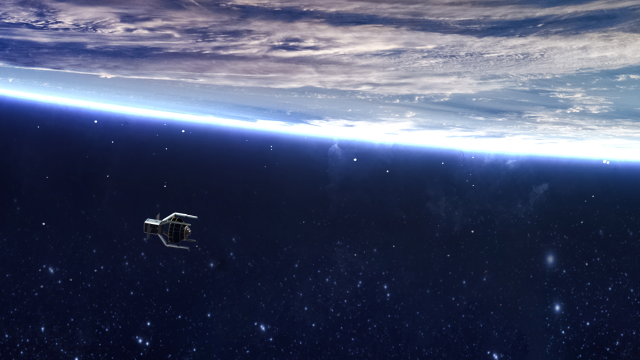
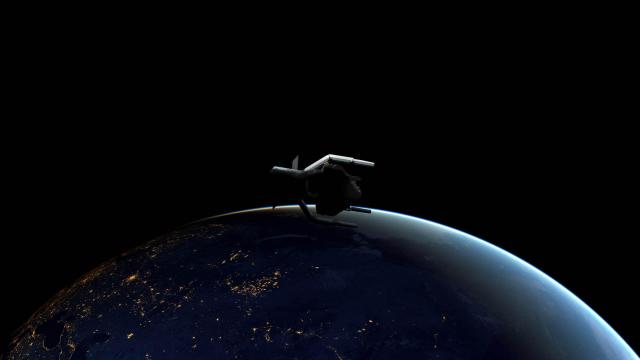
1:15PM Wilson Rothman | There are 18,000 pieces of tracked space debris in orbit—and millions more smaller bits—all potentially fatal. To nudge them towards the atmosphere to burn up, one scientist proposes lasers, another proposes water.
Science
ESA Reveals Next-Gen Reentry Pod, Makes NASA’s Plans Look Kinda Low-Tech
4:45AM Kit Eaton | This is ESA’s video unveiling of its Intermediate eXperimental Vehicle, a test-bed for a next-generation reentry pod. The IXV is due to rocket aloft on Europe’s new small Vega launcher in 2012 and test out a range of systems for a “proper” future vehicle. Ditching the simplicity and limitations of the now old-fashioned conical-pod-with-heat-shield design, it’s a lifting-body shape with a thermal protection system somewhat like the Shuttle’s. The wingless pod is steered by aerodynamic body flaps with reaction jets as backup and for orbital maneuvers, and when it’s low and slow enough it’ll pop a ‘chute and plop into the Pacific. And it’ll do it all autonomously. Clever stuff. [ESA via Slashdot] More »
Vehicles
Spacecrafts to Unravel Earth’s Mysteries or Destroy It
11:15PM Jesus Diaz | This is the Gravity field and steady-state Ocean Circulation Explorer. Or GOCE for short. Or the most amazingly good looking spaceship orbiting around planet Earth. Or Darth Vader’s racing shuttle. Call it whatever you want but when it’s launched next month on a Russian Rockot, this vessel will be the first of the five Earth Explorers, which are here to save the planet even while they look like they can destroy it. More »
Science
Metals Manufactured In Space Could Increase Jet Engine Efficiency
9:00AM Adrian Covert | The European Space Agency is looking into manufacturing intermetallic materials in zero gravity space to cut the weight of jet engines in half and increase fuel efficiency. Intermetallic materials are different than alloys in that they are combined at the molecular level, as opposed to merely melting down metals and creating a homogeneous mix. Scientists want to manufacture Titanium Aluminide up in space because on earth, the difference in the metals’ weight prevents the allow from diffusing correctly. The ESA currently plans to go up to the International Space Station to conduct tests on the manufacturing process. [BBC via io9 via DViCE] More »
Science
Space Is Full of Crap
1:40AM Jesus Diaz | The European Space Agency has just released images showing all the satellites and human-made debris now orbiting space as a result of 51 years of launching stuff since Sputnik. That’s about 6,000 satellites up there—of which only 800 remain operational—plus thousands of other objects from launches and accidents. According to their mindblowing simulations things are getting a lot worse: More »
Science
Space Truck Executes “Text-Book” Automated Docking at International Space Station
2:23AM Addy Dugdale | At 10.45 EST this morning, the Jules Verne docked at the International Space Station, with a 7,500-pound cargo containing equipment, supplies, water, food and gases—and no human driver. The AI-assisted landing of the European space truck after a 26-day journey was described as “text-book” and here it is, courtesy of NASA TV. While the Jules-ISS hook-up is not the first unmanned docking, anything with an automated system that can track down an object that is moving at 27,00 kilometres per hour and attach itself with just a 2-centimeter leeway, is pretty damn awesome in Giz’s book. [NASA] More »
Science