
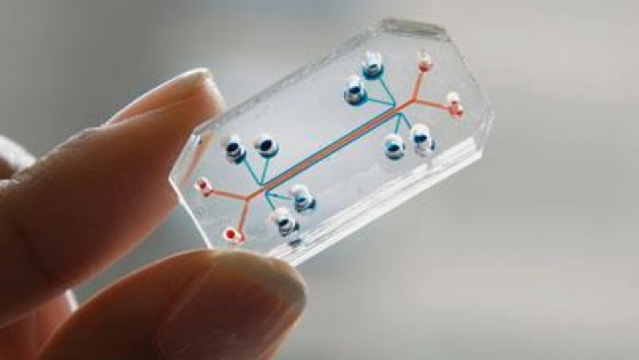
Testing new and potential life-saving drugs can be a harrowing process because of the risk involved with not knowing how a substance will react once in the human body. Harvards scientists are hoping that microchips, such as the one pictured above, can mimic the function of human organs well enough for them to test those drugs.
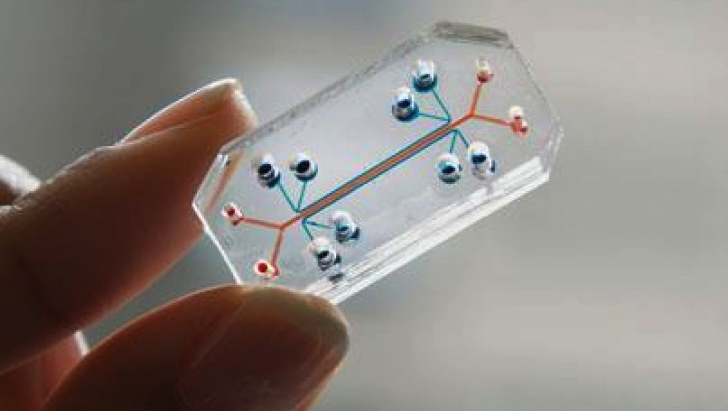
While the chip doesn’t look like a human organ in any way, Inhabitat says that the little, seemingly simple objects are more than capable of replicating the processes of those organs.
Each faux organ is made from a clear flexible polymer and is about the size of an average computer memory stick. The microchip organs feature hollow microfluidic channels that are lined with living human cells. Although they don’t resemble the real shape of these organs inside the body, the cells allow scientists to observe how these organs might react to new drugs.
The Harvard researchers hope to make 10 of these chips (each one associated with a different organ) and has FDA Chief Scientist Jesse Goodman so excited that he believes it could be the best way to test new drugs. Along with $US37 million in funding from DARPA, that’s a strong endorsement. [Harvard via Inhabitat]