
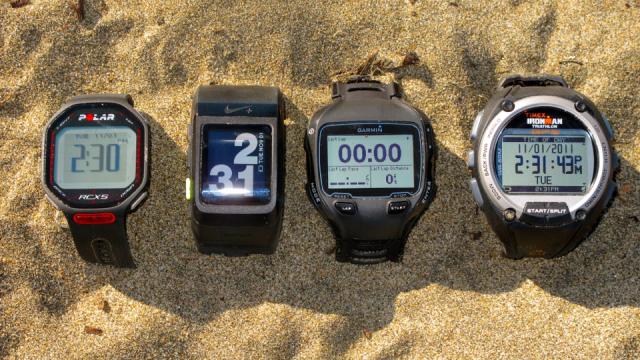
You need to get in shape. Or maybe you are in shape, and want to be… inshaper. These fitness watches will run you ragged, or at least track your heart beats, distance travelled and speed until you win this thing.
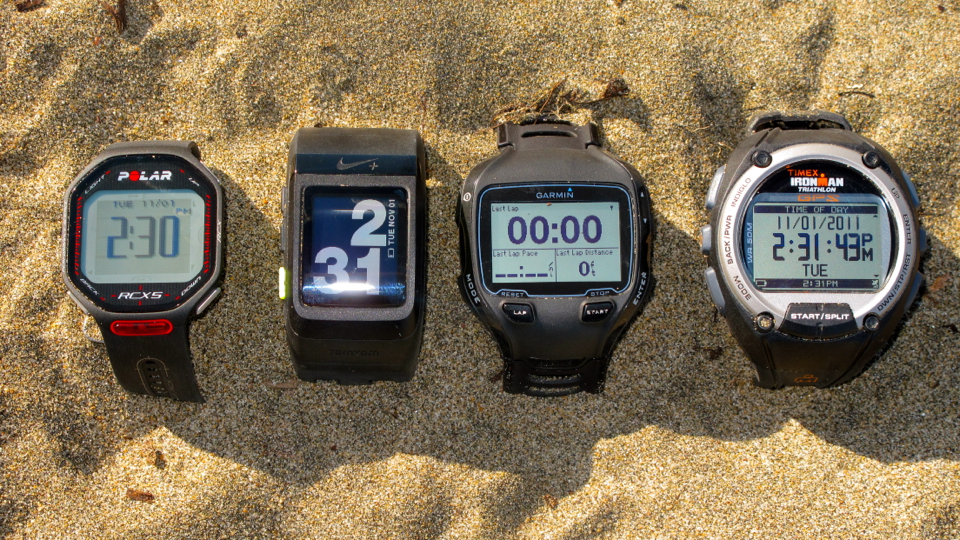
Off to the races!
4th Place: Timex Ironman Global Trainer GPS with Heart Rate
At first glance, the Global Trainer looks pretty fit. The watch itself stores up to 20 workouts, and you can download them to TrainingPeaks to slice and dice your data afterwards. A nice multisport mode makes it dandy to wear while running or riding, and it can display up to four data points at once. Moreover, there are a phalanx of fields to choose from. In addition to garden-variety info like speed and distance and heart rate, it tracks some really cool metrics — like the total amount you’ve climbed during a workout, or the amount of time you’ve spent in a certain altitude zone. 50m of waterproof protection means you can swim with it without fear. The ANT+ receiver will hook up to power meters, cadence sensors and heart rate monitors, huzzah!
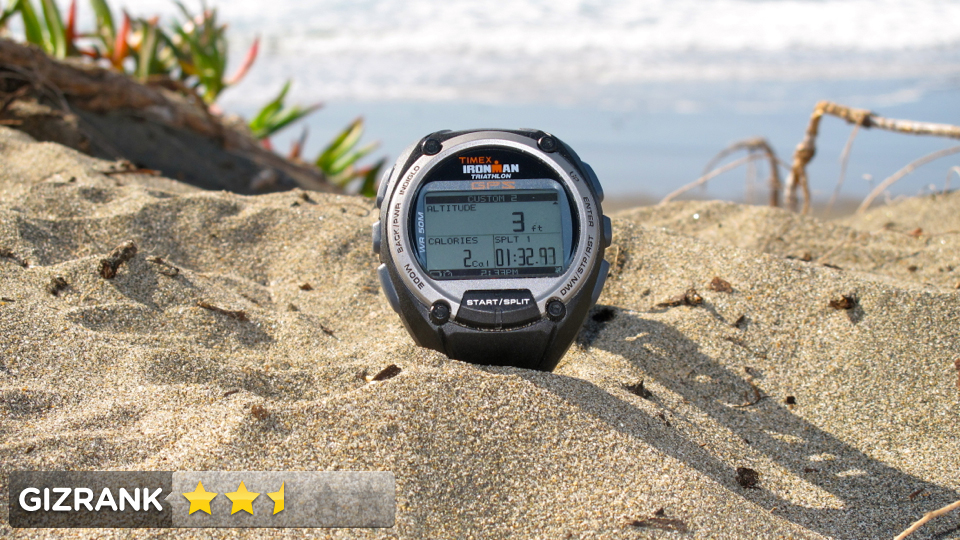
The problem is Timex’ ticker is approximately the size of a small rock crab — and similarly comfortable to wear on your wrist. It’s noticeably heavy and bulky. If you have small wrists, like I do, it looks like a dinner plate perched on a tightrope. And then there are the buttons. There are too many of them (seven!), and they are packed too close together. When you’re moving fast, you don’t want to have to futz with your gear any more than necessary. While this isn’t bad, per se, there’s so much out there that’s great (often at a better price) that I wouldn’t recommend the Global Trainer to anyone.
Timex Ironman Global Trainer GPS
• Price: $US360
• Workouts: 20
• GPS: Yes
• Footpod Included: No
• HRM strap included: Yes
• Gizrank: 2.5
3rd Place: Polar RCX5
Oh no! This thing is so thin and light I’m a little worried about it. Are you OK, RCX5? Have you lost your appetite?
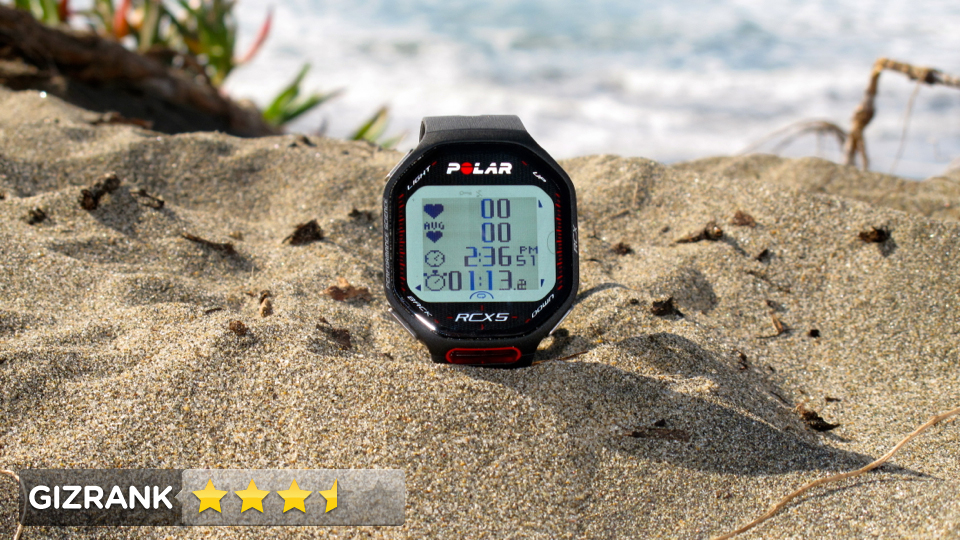
Heck no, it is quite fine. And in fact, it has a huge appetite. An appetite for data. If you’re accustomed to massive ugly fitness watches that you’ll be positively taken aback by its slim form and style. I mean, you’re not gonna wear this thing on a dinner date, but it’s fine for any casual situation. It has a big bold display that’s easy to read and easy to manage while on the go. Buttons are well-placed, and easy to access while exercising. Once you grok the interface (which is tricky, see below) you’ll have no problem swapping fields and views while you are running.
But the Real Deal Holyfield is what it can do with numbers it measures, especially heart rate. It takes deliciously complex heart-rate measurements. A ZoneOptimizer feature measures your heart rate variability and uses that to calculate your level of fatigue before each workout. Then is automatically sets your heart rate zones for you (if you’ve used Polar products before it’s similar to OwnZone). You can also set up sport-specific training plans right from the watch, and use them in conjunction with the ZoneOptimizer. If ZoneOptimizer detects that you’re too beat, the training program automatically steps down a smidge. All that data then gets sucked up to Polar’s web app, where you can view your progress, recovery time, and training loads. It’s like a magic endurance coach who lives on your wrist and doesn’t wear embarrassing shorts. It will even help you improve your form by tracking your cadence (the number of steps you take per minute). If you are a serious competitive athlete this thing is absolutely aces. It will help you understand how effectively you’re training and what’s going on with your body with more precision than anything else we tried.
But the reason it’s so thin? There’s no onboard GPS. It comes with a footpod to track speed, distance and cadence while running, but you’ll need to buy the (likewise quite slim) GPS pod pack for an extra $US100 to map your workouts. Also, while Polar has made great strides in making its software easy to use, learning the in-watch interface for adjusting settings is like navigating a hedgerow maze filled with ether. It’s confusing and full of wrong turns that you can’t easily escape. Polar hasn’t changed that interface much in years. It’s time, my fit Finnish friends. It’s time.
Polar RCX5
• Price: $US350
• GPS: No
• Footpod Included: Yes
• HRM strap included: Yes
• Gizrank: 3.5
2nd Place: Nike Plus GPS SportWatch
This watch will look great on your wrist, no matter where you travel. It’s slim — just 16 mm thick — and the cold sans serif display looks modern and stylish. It could be mistaken for a Japanese import, even, were it not for the three side buttons. Hit one, and it flips from hipster to track star, revealing some serious fitness street cred. The watch has an onboard TomTom GPS chip, and will also link up to a Nike Plus shoe sensor and Polar WIND heart rate monitor. (The latter is sold separately). Fire it up and it tracks your speed, distance, elapsed time and (if you have the strap) heart rate. It also counts laps — just tap the screen to tick them off — and has a simple interval timer. If you don’t run for a while, it will give you clever little nudges, like “run with me later?” The clasp conceals a USB connector. Jack it into your laptop, and it automatically uploads your run data to Nike Plus, mapping it along the way. The online software is gorgeous, with a great intuitive interface. There’s a new feature shows heat maps of routes in your area will even help you find new places to ramble.

The entire process is so dead simple to use, your cat could probably figure it out (given enough time and kitty treats), but the SportWatch is not bummer-free. Speed is only displayed as pace — that’s basically useless on a bike, where you want MPH. Want to reset the clock? You have to do that on a computer — which doesn’t make much sense given that by knowing where it is, its GPS should also be able to tell when it is. But overall this is a fantastic device. It will make a great timekeeper for the beginning runner, all the way up to the advanced.
Nike Plus GPS SportWatch
• Price: $US200
• GPS: Yes
• Footpod Included: Yes
• HRM strap included: No
• Gizrank: 4
BESTMODO! Garmin Forerunner 910XT
Garmin’s Forerunner 910XT is more or less an update to another multisport watch in its lineup, the Forerunner 310XT. But that’s OK, because the 310 was a hell of a training tracker. One that the 910 XT completely outpaces. The interface is strikingly similar, it can display from one up to four data points at once on a screen, and you can have up to four preset screens per sport. The display is bold and easy to read, whether you’re running or on a bike. Thanks to ANT+, it can also grab power data from your bike. But it really takes off in the water. It’s waterproof up to 50m, tracks your swim distance (even indoors), stroke count, laps, and swolf score (a measurement of swimming efficiency). Need to know if all this exercise is working? The 910 links up with your Tanita scale to track your weight and body fat percentage. A barometric altimeter works with GPS to get you super accurate elevation totals. A training effect score lets you know how your fitness is going. Heart rate based calorie counting gives you the real deal on your workout intensity. And finally, automatic wireless data transfers back it all up to your computer.
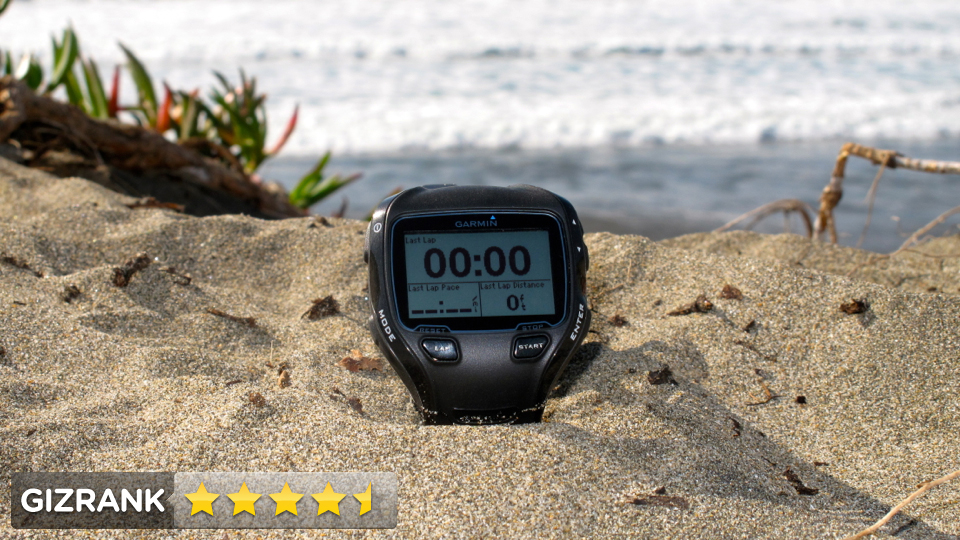
And when you do look at that delicious data, Garmin’s Connect website is among the best in the business. It’s both user-friendly with easy-to-understand graphs, maps and charts, letting you drill down on important metrics like how your heart rate changes at elevation. It’s too thick to wear all the time, but when you’re exercising it wears well on the wrist, basically evaporating away. The GPS got a fix faster than a junkie on Skid Row, vibrating alerts clue you in on your performance, glance-free. And best yet, it’s super easy to use, both during exercise and afterwards.
It is, quite simply, the total package. This is the fitness device I’ve wanted for years. It it the culmination of so many things Garmin has done well over the years fully realised.
The only real downside is its price. It is quite expensive. But you are so, so worth it.
Garmin Forerunner 910 XT
• Price: $US400
• GPS: Yes
• Footpod Included: No
• HRM strap included: No
• Gizrank: 4.5